
the ethos






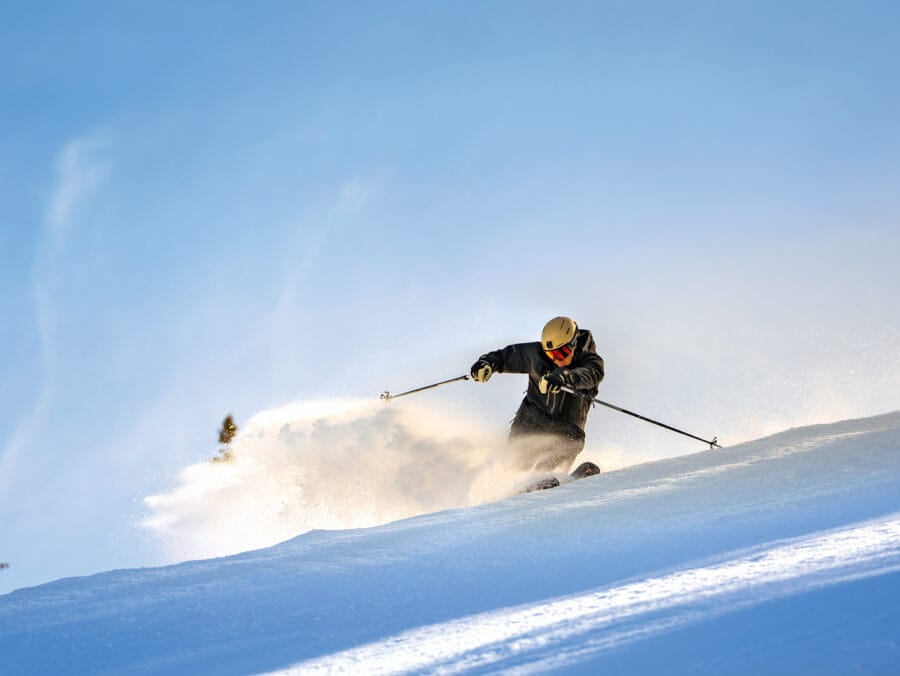
First light comes down the peaks in order, one face and then the next, and the runs fill and empty against a sky that goes on for miles. All of it is arranged around a fact that will never change: the mountain does not move. A home can be taken to the studs and reborn, its kitchen reimagined, its finishes swept away for whatever comes next. What it cannot do is inch closer to the snow. That distance, once set, is set forever.

Which is why true ski-in/ski-out behaves less like a feature than an asset class of its own. The phrase gets stretched. Plenty of homes marketed that way are, on inspection, ski-near: a shuttle ride, a road crossing, a walk down an icy path in boots with gear over your shoulder. The market isn’t fooled by the language. Analysts who study these properties draw a hard line between genuine slope-side access and mere proximity, and even homes a short walk from the snow show measurable price compression against those with real access. Buyers understand intuitively that a pathway or a crossing is a different daily life than stepping from your community onto the mountain.
Most home features follow a curve: desirable when new, ordinary in a decade, dated after that. Ski access moves the other way, and the reason is supply. No one is building more mountainside. The land that can ever be genuinely ski-in/ski-out at a resort of Deer Valley’s caliber is fixed by geography, a thin finite ribbon along the lifts, and it was spoken for long ago. New homes appear constantly. New true ski-access homes almost never do. That structural scarcity is why the premium has held through market cycles, valued in industry analyses at as much as roughly 45 percent over comparable homes without direct access. The local numbers say the same thing plainly: the Deer Valley corridor has led the region on price per square foot, more than doubling since 2020, while luxury ski homes broadly have climbed about 150 percent across two decades.


Then, almost uniquely, that fixed supply expanded once. Deer Valley’s East Village is among the largest resort expansions in North America: thousands of acres of new terrain, four new peaks, sixteen new lifts, anchored by a gondola that carries skiers over 2,500 vertical feet to the resort’s highest runs. A new frontier of ski-access real estate opening at a mature, blue-chip resort is the rarest thing in this market, and by definition a one-time event. Homes inside it aren’t buying into an established scarcity. They’re establishing it.
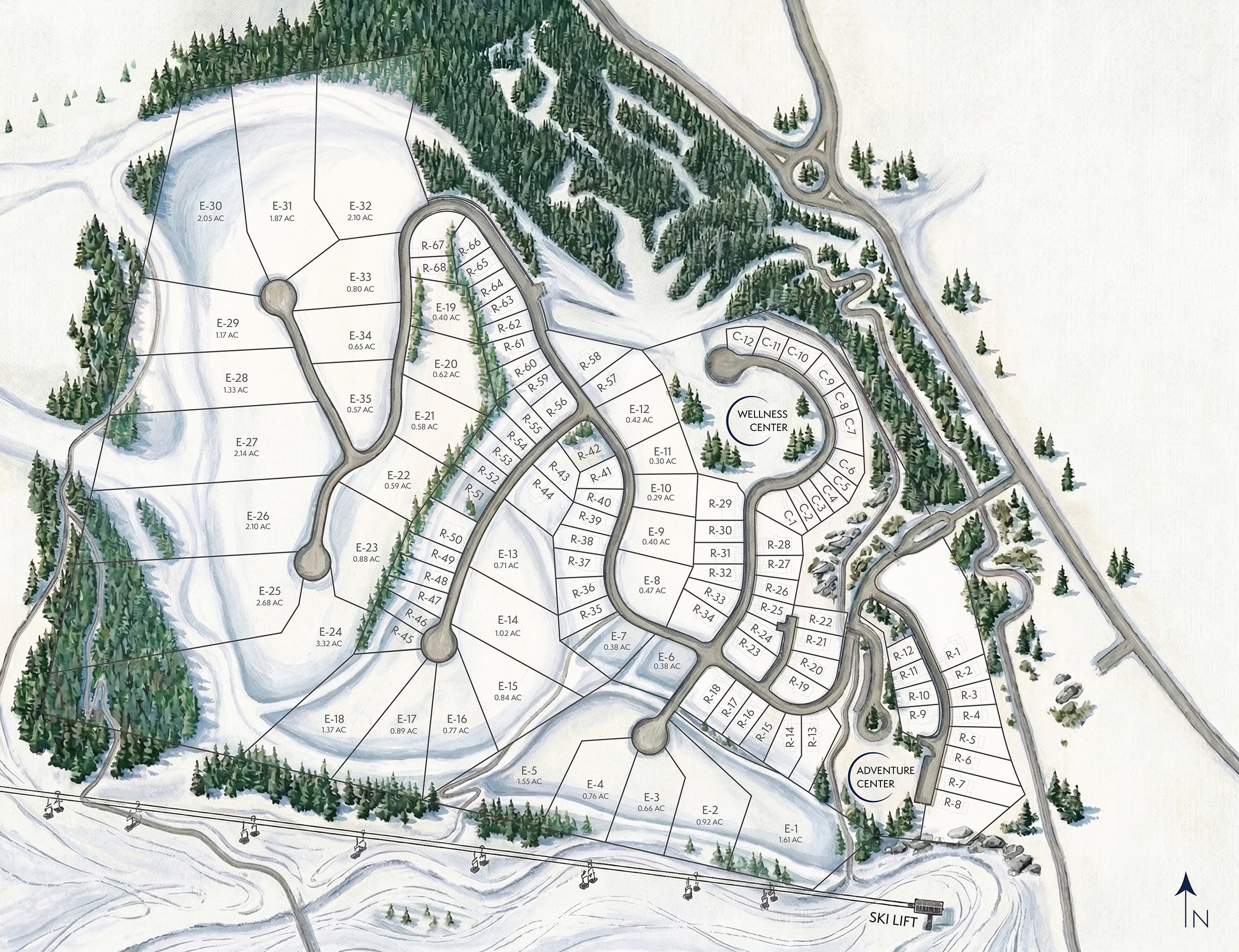
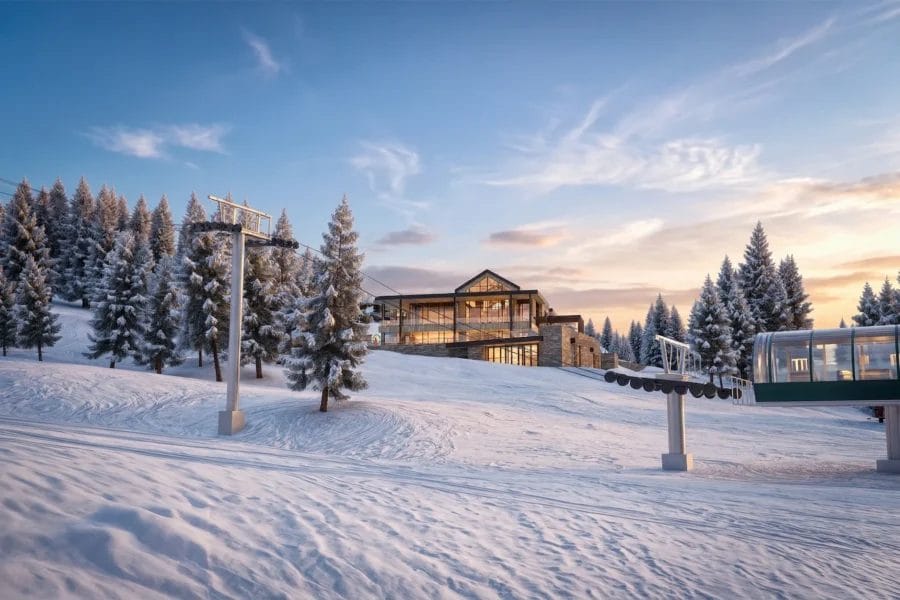
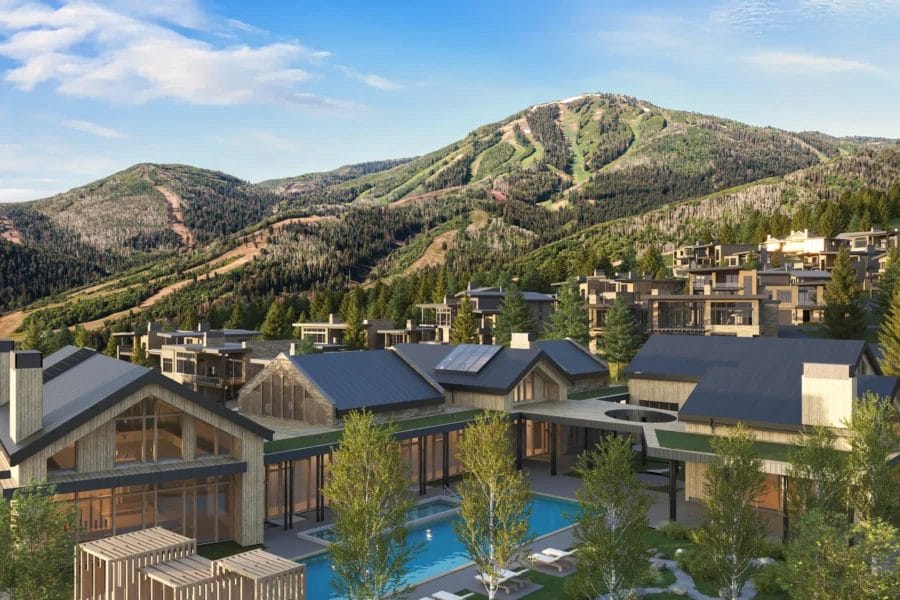
Velvære was designed around this logic rather than decorated with it. Virtually every home in the community, the estate homesites, the Chalets, the Signature Residences, is ski-in/ski-out. Access isn’t a premium tier held back for a few lots. It’s the premise of the place. The Neptune Express chairlift turns fewer than two hundred feet from the residences. A private ski beach handles the transition from door to snow, a full ski valet takes the friction out of it, and a private run reaches the expanded terrain without passing through the public base.

Markets move. Rates rise and fall, the coveted finish of this decade becomes the renovation of the next. Through all of it the mountain holds its line, and the number of homes where you can leave your door and step onto snow stays what it has always been. Not the most beautiful thing about a home. Simply the one thing the next owner can never add, which is precisely why it endures.
More than a home. More than a club.


